





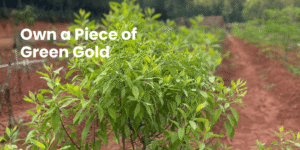

Sandalwood is emerging as one of India’s strongest natural asset classes because of its rising global demand in pharma, wellness, and luxury industries. With a sharp supply shortage, long-term price appreciation, and government-backed legality, managed sandalwood farmland is quickly becoming a preferred alternative investment for Indians seeking land security + natural asset growth. This blog breaks down why sandalwood is trending in 2025, the economics behind it, and how managed farmland models are making it accessible for everyday investors. To get the full project deck, request it via our website.
Is Sandalwood the Next Big Green Asset in India? A 2025 Deep-Dive
India’s investment landscape is changing.
Gold is expensive.
Real estate is saturated.
Stock markets are volatile.
But one category is quietly exploding in demand:
🌱 Natural asset investing.
And leading that category is Indian Sandalwood (Santalum album) — the “green gold” of modern India.
2025 has brought sandalwood back into the spotlight thanks to global shortages, pharma demand, and a new wave of sustainable investors who want to diversify with real, physical assets.
Let’s break down why.
1. Sandalwood Demand Has Skyrocketed — Especially After 2023–2024 Pharma Boom
Sandalwood is not just for perfumes anymore.
Today, it powers:
- Anti-cancer research compounds
- Dermatology medicines
- Luxury skincare
- High-end wellness products
- Aromatherapy & essential oils
- Ayush therapies
- Premium incense & spiritual products
Global markets cannot meet demand — and India holds the richest genetic variety of natural sandalwood.
The gap between demand vs. supply is the main reason analysts call sandalwood a future-proof natural luxury commodity.
2. Global Supply Crisis Is Driving Prices Up Every Year
Australia and Indonesia, once major producers, have had massive declines due to:
- Climate instability
- Illegal harvesting
- High disease mortality
- Low genetic quality
Meanwhile, India’s production cannot keep up with pharma + luxury markets.
Current reality (2025):
- Premium heartwood shortages
- Essential oil demand at its all-time peak
- Increasing dependence on plantation-based supply
This imbalance is exactly what fuels price appreciation.
3. Why Sandalwood Plantations Are Becoming a Popular Land-Backed Asset
People are shifting from purely financial investments to physical, appreciating, eco-friendly assets.
Managed sandalwood farmland provides:
✔ A titled land asset
✔ A growing biological asset (trees)
✔ Future harvest potential
✔ Long-term appreciation
This makes it stand out from:
- Stock market risks
- Short-term crypto volatility
- Expensive urban real estate
- Unregulated “too good to be true” schemes
Sandalwood is slow but safe — ideal for long-term wealth preservation.
4. India’s 2025 Sustainability Trend Is Fueling Sandalwood’s Popularity
Gen-Z and Millennials are driving a new wave of eco investments.
People want:
- Carbon-positive projects
- Soil-regenerating agriculture
- Tree-based wealth over concrete
- Nature + ownership combined
- Ethical, green asset classes
Sandalwood plantations check every sustainability box.
5. Managed Sandalwood Farmland Solves the Biggest Problem: Expertise
Growing sandalwood is not easy.
It requires:
- Host plants
- Drip irrigation
- Soil management
- Pest control
- Intercropping
- Systematic pruning
- Expert supervision for 12–15 years
A single mistake can slow growth by years.
Managed plantations eliminate all risk:
You own the land.
Trees are grown by experts.
Your biological asset matures safely.
This is why managed farm models are gaining popularity across India.
6. Sandalwood Is Now a Part of India’s ‘Alternative Wealth’ Portfolio
Just like:
- Timber investments
- Organic farmland
- Coffee estates
- Vineyard land
- Natural-resource estates
Sandalwood plantations are now a recognized category among:
- NRI investors
- Senior wealth managers
- Family offices
- HNIs
- Early-age eco-investors
It is not hype.
It is a fundamental shift in wealth behavior.
7. The 2025 Trend: “Green Assets + Land Ownership”
This year’s biggest investment trend is combining:
Land (secure) + Trees (appreciating asset)
People want:
- Rarity
- Scarcity-driven value
- Tangible ownership
- Long-term, low-risk returns
- Eco-conscious identity
Sandalwood is perfectly placed as a luxury agrarian asset.
Frequently Asked Questions (SEO Snippet Targets)
Is sandalwood farming profitable in 2025?
Yes. Due to global shortages and rising pharma demand, sandalwood remains one of India’s highest-value natural assets.
How long does sandalwood take to mature?
Typically 12–15 years for harvest-grade heartwood.
Why is sandalwood considered “green gold”?
Because of its extremely high market value, limited supply, and strong global demand.
Can first-time investors enter sandalwood projects?
Yes — managed farmland models make it accessible for beginners, without needing agricultural expertise.
Is it legal to grow sandalwood?
Yes. Growing sandalwood on private land is fully legal in India, with regulated selling rules.
Final Thoughts
Sandalwood isn’t just a farming crop.
It is a long-term natural asset with global relevance, sustainability value, and real scarcity behind it.
With rising demand, limited global supply, and consumers shifting towards green assets, sandalwood is positioned as one of India’s most promising wealth-building natural commodities in 2025.
If you want to explore managed sandalwood farmland, request our full project deck on our website.
