





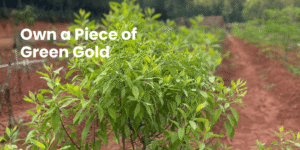

In 2025, investors aren’t just buying land — they’re buying carbon. India’s new wave of carbon-earning farms is turning agroforestry into a wealth engine, and sandalwood stands at the center as the most profitable and climate-positive tree crop. This blog breaks down how carbon credits + sandalwood farming are reshaping investment portfolios globally.
Want our investor deck? Request it via the contact form.
Why 2025 Is the Breakout Year for Carbon-Earning Agriculture
Climate-linked investing has shifted from trend → necessity.
With global companies pledging net-zero and governments tightening sustainability norms, carbon credits have become a new-age commodity — just like gold or crude oil.
And here’s the interesting part:
Agroforestry is the fastest and most accessible way to generate carbon credits at scale.
But not all trees qualify equally.
And not all carbon farms are profitable.
🌳 So Why Is Sandalwood the No.1 Carbon-Earning Crop in India?
1️⃣ Sandalwood = High Carbon + High Commercial Value
Most carbon crops don’t produce a high-value end product.
Sandalwood does.
It stores carbon and generates premium wood + oil worth lakhs per tonne.
2️⃣ Long Growth Cycle = More Carbon Storage
A 12–15 year lifecycle means prolonged carbon capture — ideal for crediting.
3️⃣ Government-Recognized Agroforestry Species
Santalum Album ranks among the best carbon-sequestering hardwoods.
4️⃣ Strong Global Demand from Pharma + Perfumery + Wellness
Even if carbon markets fluctuate, sandalwood remains a reliable economic asset.
This dual model —
Carbon credits + Premium wood output
is exactly what climate investors have been looking for.
🏦 Who’s Investing?
2025 has seen a massive surge from:
- Family offices moving from real estate → sustainable assets
- NRIs planning long-term India investments
- Climate-focused funds
- High-net-worth individuals diversifying beyond traditional equity
- Corporates exploring voluntary carbon credits
The shift is clear:
People don’t want land that costs them money.
They want land that earns.
🔥 The “Carbon-Earning Farm” Portfolio Strategy (Explained Simply)
A model that’s going viral among green investors:
- Buy/participate in managed agroforestry land
- Generate carbon credits annually
- Earn long-term harvest revenue at maturity
- Hold real asset + biological asset simultaneously
It’s like owning:
- A long-term FD
- A growing fixed asset
- Annual climate-linked income
All in one.
🌳 Why Sandalwood Wins Against Other Tree Crops
| Feature | Sandalwood | Teak | Mahogany | Fruit Crops |
|---|---|---|---|---|
| Carbon storage | ⭐⭐⭐⭐⭐ | ⭐⭐⭐ | ⭐⭐⭐⭐ | ⭐⭐ |
| Price per tonne | Very High | Medium | Medium | Low |
| Harvest cycle | 12–15 yrs | 20–25 yrs | 18–20 yrs | 1–5 yrs |
| Global shortage | Extreme | Medium | Low | Low |
| Sustainability | High | Medium | Medium | Medium |
Sandalwood remains the strongest dual-asset performer.
🛡 Why Trusted, Managed Projects Matter
Because carbon credits require:
- scientific audits
- proper density & spacing
- soil measurement
- long-term plantation continuity
- verifiable data
At Aranya Bharat, every sandalwood tree has a unique ID, GPS mapping, growth monitoring, and compliance-ready documentation — making it easy for investors to claim credits.
🚀 The Future: India Could Become the World’s Largest Carbon + Sandalwood Hub
The government is pushing carbon markets.
Global brands need high-quality credits.
India has the climate, soil, and scale.
This decade belongs to green wealth creators.
✨ Final Thought
Real wealth in 2025 isn’t built on speculation — it’s built on natural assets, carbon intelligence, and sustainable commodities.
And in that intersection, sandalwood stands unmatched.
